The Double Refuge ☯️ Herr Jung
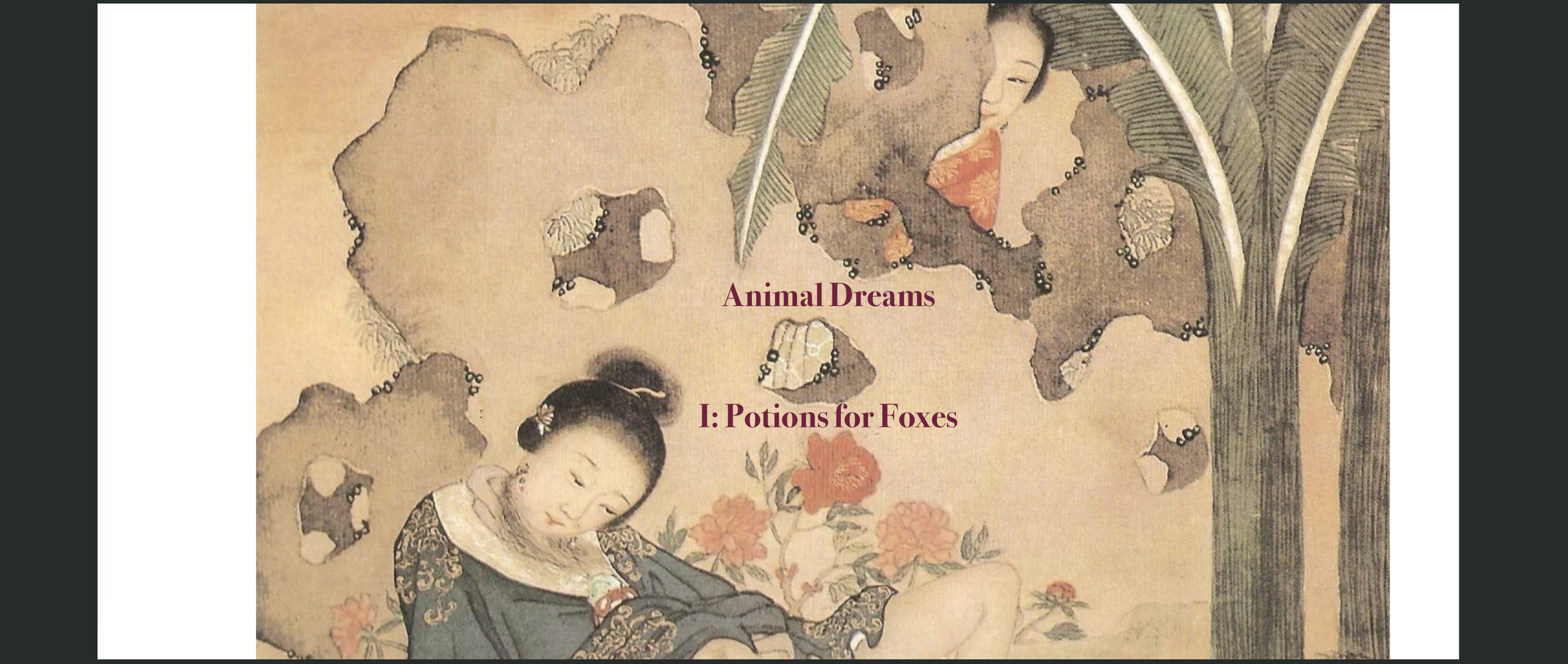
Animal Dreams
Potions for Foxes - The Forest - Everything is One - Wily Coyote - Flight
☯️
While outside strangers praise old norms
Inside us strangers take new forms
Potion for Foxes
In “Confrontation with the Unconscious” Carl Jung writes that inside each of us there’s an anima (in men) or an animus (in women). For men, the anima is the inner female, an archetypal figure that’s both a foil and a guide, both a deception and a redemption.
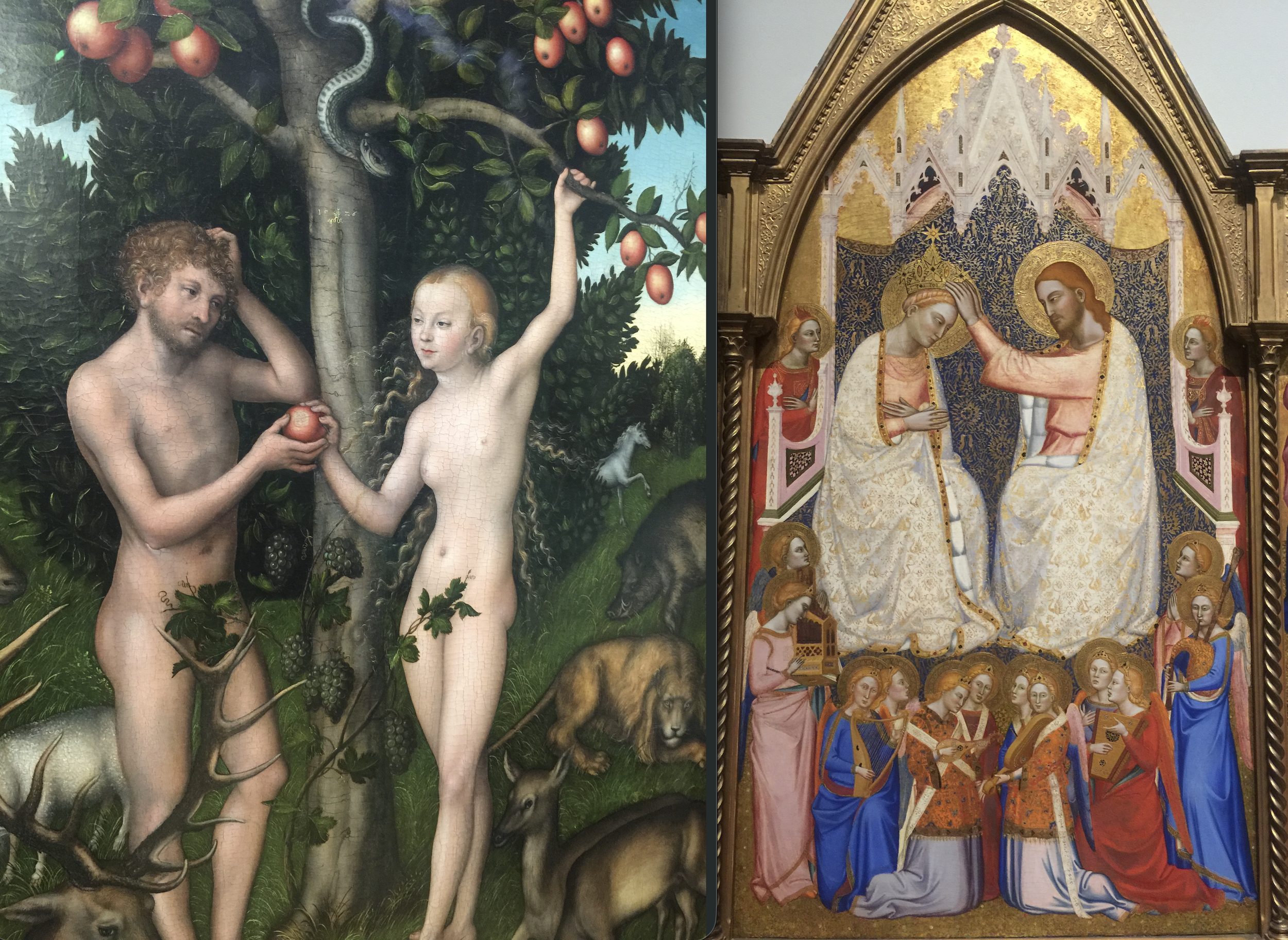
In our dreams the anima presents itself in multiple forms, from a dangerous femme fatale to a goddess who can save us from fatality. I imagine her as both Eve and Mary:
Traditionally, the priest tells us to avoid the former and embrace the latter. Yet Jung counsels us to let go of our egos and to enter into the fantasies of the anima, from one end of the spectrum to the other. We’re to let loose her power and wisdom, without losing control of our own minds.
I have all kinds of problems with Jung’s method, which is of course the theme of this chapter. On this page I’ll suggest that Jung’s method is an odd one, and that it may work better in the breach than in the observance…
☯️
Lately I’ve been wondering if my anima is a Chinese lesbian sex-maniac. If this is true, I have no idea how to handle her. I’m a bit worried that she’ll slip through my fingers. And I’m also a bit worried that she won’t.
In a dream I had lately my anima took the form of a would-be vampire:
In my dream a Chinese lesbian put on an upper row of false teeth. The two eye-teeth were much larger than the others.
I’m not sure where the construction of this anima came from. For some reason I suspect she’s a lesbian, slightly miffed that I’m nudging my way into her uniquely feminine territory. In the dream I didn’t have time to tell her how much admiration I have for her and her kind. But I suspect that she wouldn’t have cared.
In the mid 90s I was invited by the poet Goh Poh Seng to his birthday party on Commercial Drive, a.k.a. Lesbian Central. Later in the evening I ended up in a back room with a group of young Vancouver writers. The lesbian writer I admired at the time, Larissa Lai, was there, and so was Goh Poh Seng’s son (he later wrote Surviving Samsara: A Memoir of Breakdowns, Breakthroughs, and Mental Illness). I remember being fascinated by Larissa: she had just came out with a novel about lesbians, Daoism, and Chinese myth, all of which were down my alley. But in talking to her I got the feeling that she couldn’t have cared less about my lesbian sinophilia.
It wasn’t her fault; I’ve always had too much of a thing for lesbians — and for Chinese women, I guess, although I can’t see how a preference like that is a philia. I love blondes too, but I just prefer brunettes. Do those who prefer blondes have blondifilia? In my defence, I recall Byron’s obsession with dark-eyed women, and Bharihari’s couplet, The clear light of man’s discernment dies / When a woman clouds it with her lamp-black eyes. In any case, when I was drunk at parties, I used to say that I was a Chinese lesbian in my past life. But I was an agnostic back then, and didn’t really believe in reincarnation. I just said that to shock people. But everybody just ignored me and went on to the next round of mescal.
It was around that time — during those crazy grad school years — that I met a gay student who was keen to convert me. He took me to all the hard-core gay bars downtown, but I still lacked enthusiasm. I made it clear to him that I was strictly an observer, not a participant. In one final attempt he suggested that we go with a mutual lesbian friend, and her Chinese girlfriend, to a bath-house on Hastings Street. What I saw there — two slim naked lesbians kissing two feet in front of me — is burned into my mind so deeply that I can’t tell if it caused my obsession, or if it merely shone a light on what was already there. Needless to say, my gay acquaintance realized the futility of his efforts, and I was left to imagine what I could never experience.
I did, however, write a short story about a bicurious young woman who went to university in Geneva. She picked grapes on the slopes west of Lausanne, and ended up in bed with a Chinese lesbian, a fellow grape-picker on the slopes. Like my protagonist, I also went to university in Geneva, picked grapes on the slopes west of Lausanne, and ended up in a bed at the vineyard. But the resemblance ends there. There was no question of a Chinese lesbian. I would have remembered that part — and I would have reworked it endlessly in my brain.
If you have a hard time imagining all that, or if you suspect I’m a fraud for writing from a lesbian’s perspective (I may well be), you can read it for yourself — in Part 2 of 🇮🇹 Roman Holiday 1. Campo de’ Fiori - 2. Outskirts. I assure you that the sex isn’t gratuitous and that the imagery isn’t orientalist, despite the mermaid, the flowing gypsy skirt, and the Chinese silk. 😉
☯️
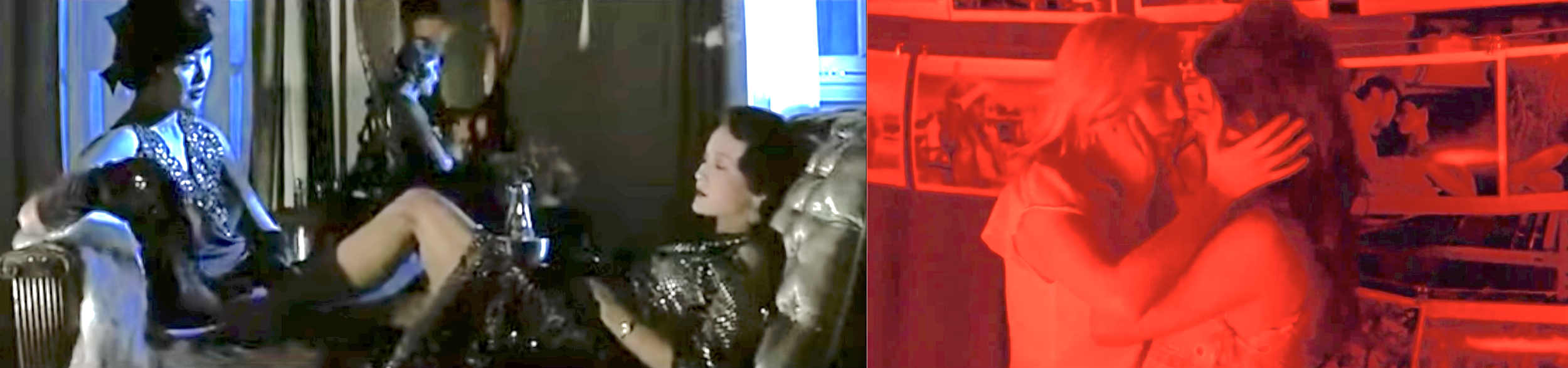
My interest in lesbians was no doubt also fuelled by Playboy and Penthouse, and by films like The Last Emperor and Vicky Christina Barcelona:

Yet I only began to think more seriously about lesbianism when I taught Larissa Lai’s When Fox is a Thousand (1995).
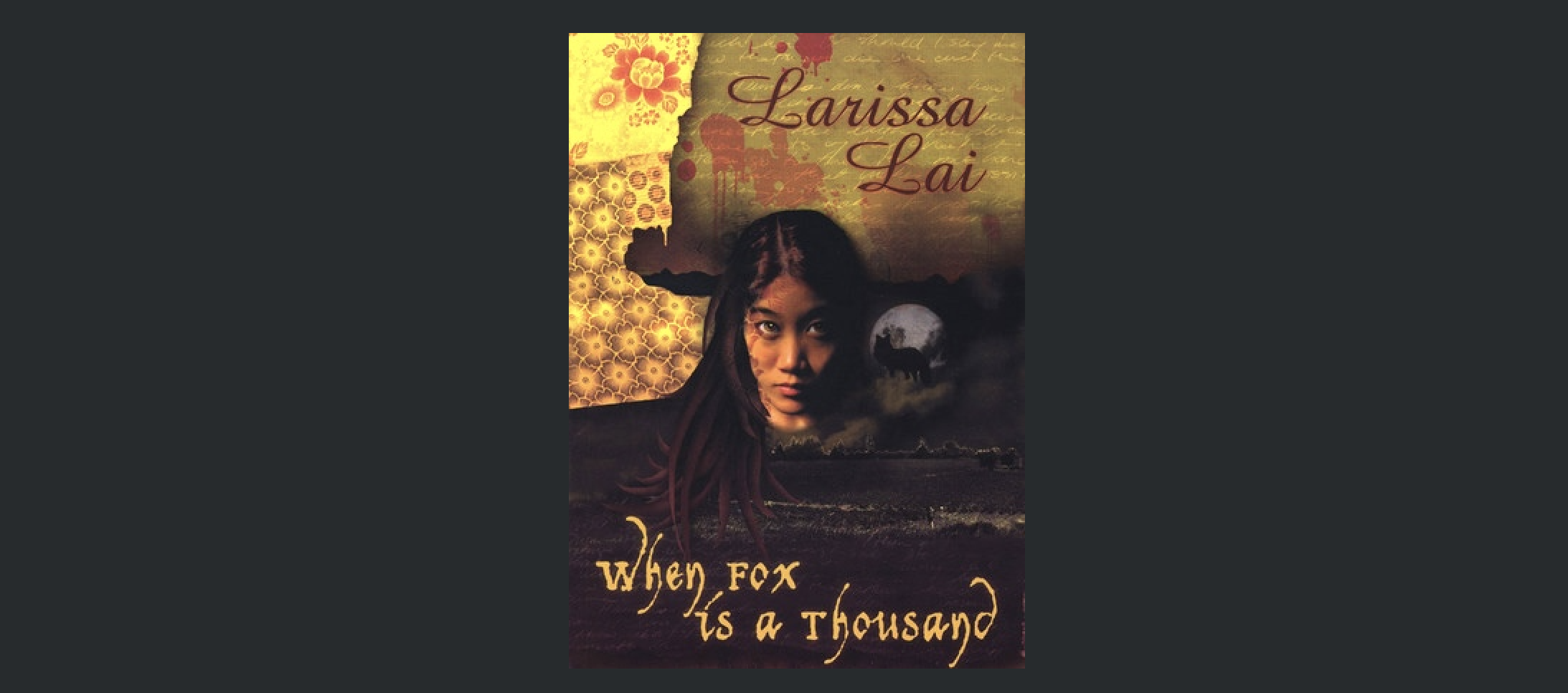
The novel is about a Chinese-Canadian lesbian student at UBC. She gets caught up in romantic relations and also in old Chinese stories about foxes, Daoism, and sexy women. Lai borrows here from Pu Songling’s Strange Tales from a Chinese Studio (written around 1700), which features the supernatural, fox spirits, Daoist dissolution of dualities, entanglements of passion, and possession by sexy fox-women. I suspect that for about 5000 years now the Chinese have tried to get into bed with such creatures without losing their heads.
In my dream a Chinese lesbian put on an upper row of false teeth. The two eye-teeth were much larger than the others. She said something like, “They’re just slabs of meat,” and leaned toward me for a bite.
☯️
I’m drawn to this type of dangerous beauty — Rosario Dawson, Scarlett Johansson, the eye-teeth of Alexandra Ocasio Cortès…
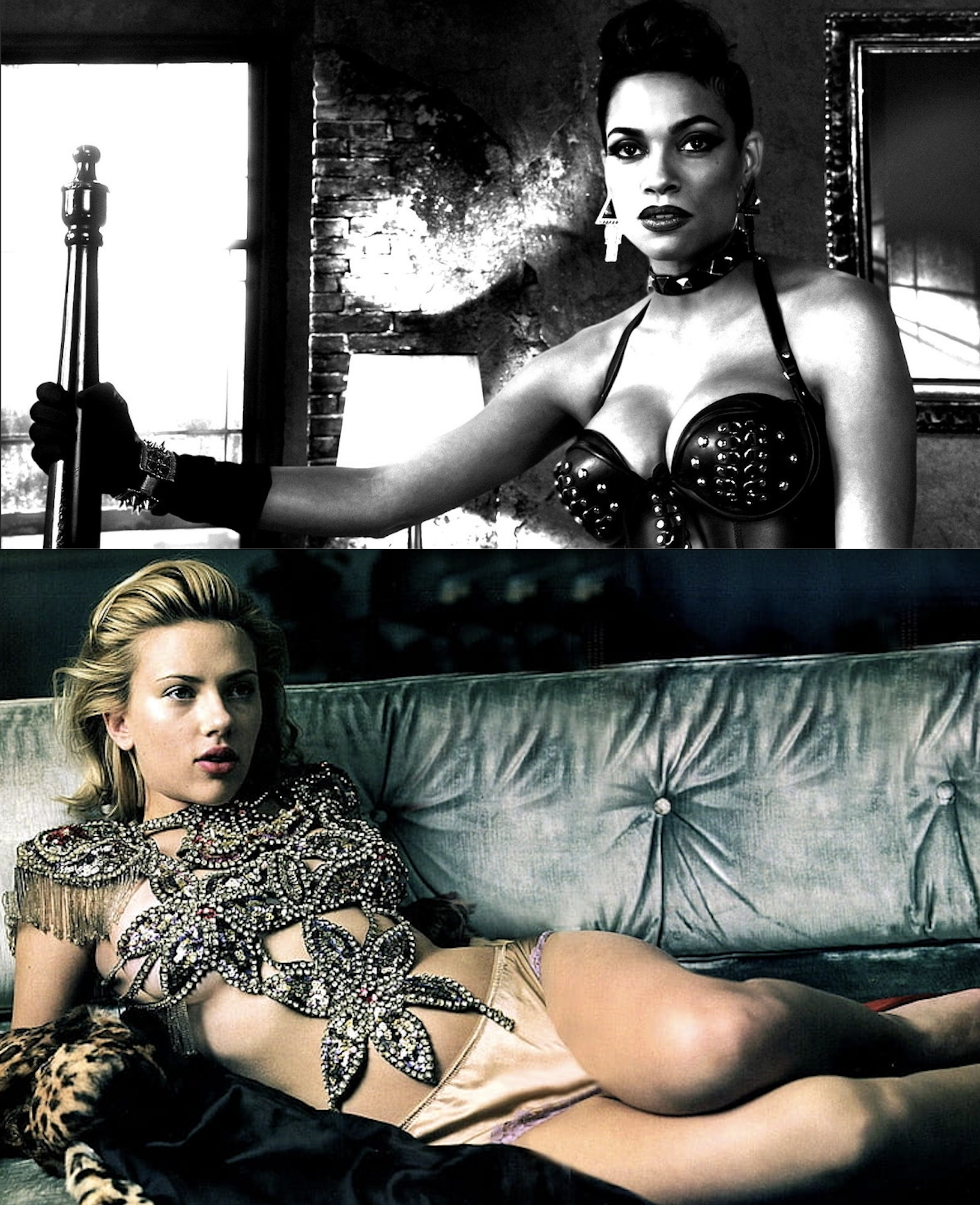
My obsession with beautiful women wouldn’t be dangerous if I wasn’t such a dupe. And yet it almost seems unfair. You’re lying asleep, frozen on your dream-bed. You’ve lost awareness of where you are and even who you are: sometimes you’re yourself and sometimes you’re thirteen years old; and sometimes you’re even someone else. In any case, you’re powerless to do the things you’d normally do. For instance, you’re powerless to pause the replays of the teacher dream: you can’t find your classroom, you don’t have the book and you don’t know what the topic is; you finally find your room but you see that students are walking out the door, muttering something about the teacher being out of touch; then along comes a gorgeous student who offers to show you to your classroom, but she takes a detour and opens the door of a staff washroom.
I’ve never seen anything like that in 33 years of teaching, yet in my dreams the part of me that I’ve forbidden just walks across the gangway into the floating world of my neurons, usurps the ship of mental state, and closes the door behind her.
In my dreams any beautiful woman can lead my dream-self by the nose, like a sheep in a long poem by Roger Waters. I repeat, any beautiful woman, even one who has no clue what novel we’re reading because she’s in fact an engineering student.
The anima on the other hand can be as clever as the fox in Pinocchio.
☯️
The Forest
In one episode of Collodi’s famous book, Pinocchio is being duped by the fox and the cat. A blackbird tries to warn Pinocchio about who he’s dealing with. In a split second the cat jumps into the air, catches the bird in its teeth, and gulps it down. The fox quickly explains the cat’s actions, justifying, as he always does, their thuggish ways.
Even when the ghost of Talking Cricket (who Pinocchio unwisely kills earlier in the story) acts as Pinocchio’s conscience and warns him not to go into the forest at night, Pinocchio ignores the warning. He tells himself that the dangers of assassins in the forest are tall-tales, made up by fathers to scare their children from going out at night. He even dares the hypothetical assassins to try something. After pronouncing these brave words, he hears a rustling in the nearby bushes. He then finds himself face to face with two murderous robbers with bags over their heads. Beneath the bags are Pinocchio’s old friends: the fox and the cat.
☯️
I too have wandered willfully into forests. During grad school at UBC I’d bring a few joints with me into the Endowment Lands and just start running. It was a big forest and I didn’t know where I was going. But I didn’t care; the fresh cool air, the complete escape from studying, and the crooked footpaths put me in another world. I’d turn up the volume on my Walkman, blast The Who’s Quadrophenia or Radiohead’s The Bends, and run for hours like a madman along the twisting paths.
The whole thing wasn’t quite as reckless as it sounds, since I knew that sooner or later I’d reach a road. In my hazy state, yet focused on the intricate footwork necessary to avoid fallen branches and watery ruts, it never occurred to me that I’d meet a pack of coyotes. Although I was auditing a course on Dante at the time, it never occurred to me that I would find myself facing three wild animals — leopard, lion, and wolf — in a dark wood:
Nel mezzo del cammin di nostra vita
Midway in the journey of our life
mi ritrovai per una selva oscura,
I came to myself in a dark wood,
ché la diritta via era smarrita.
for the straight way was lost.
Ahi quanto a dir qual era è cosa dura
Ah, how hard it is to tell
esta selva selvaggia e aspra e forte
the nature of that wood, savage, dense and harsh --
che nel pensier rinova la paura!
the very thought of it renews my fear!
… una lonza leggera e presta molto,
… a leopard light and swift
che di pel macolato era coverta;
and covered with a spotted pelt
e non mi si partia dinanzi al volto,
refused to back away from me …
… la vista che m'apparve d'un leone.
… I beheld a lion in my way.
Questi parea che contra me venisse …
He seemed about to pounce -- …
Ed una lupa, che di tutte brame
And then a she-wolf who, all hide and bones,
sembiava carca ne la sua magrezza,
seemed charged with all the appetites
e molte genti fé già viver grame,
that have made many live in wretchedness …
Nor did it occur to me that decades later I’d find myself in a dark wood, and would need Beatrice, just much as Pinocchio needed the Blue Fairy.
Back in grad school, even if Talking Cricket himself rose from his grave of grass and crushed insects to warn me, and even if he hovered above me like the Blue Fairy in the night, I’d probably have said that he sounded just like my dad trying to stop me from going to a party.
Looking back, it’s possible that a pack of coyotes got tired of the grad-school idiot running around their forest, rampaging through their ancient realm. Perhaps they’d grouped themselves into a new formation and were ready to act. But by then I was already on the road.
But they managed to track me down. After my first year of grad school at UBC I was attacked by thugs in Istanbul. They beat up my friend and I, and they kept us in a little room and tried to get money out of us. I’m convinced that if they had found the slim money-pouch inside my underwear we’d be at the bottom of the Bosphorus, communing with the crabs and shrimps. Two years after that I was robbed in Mexico City by two thugs, one with a sharp knife up against my stomach.
I can’t help wondering which of these figures — the coyotes of my imagination, or the thugs of Istanbul and Mexico City — are now making their way into my dreams.
The two eye-teeth were much larger than the others. She said something like, “They’re just slabs of meat,” and leaned toward me for a bite.
☯️
According to Jung, we need to bring together the different versions of the anima and listen to what they have to say. Only this way can we move from tempting girls who put on fake vampire teeth to Blue Fairies who lead us out of the forest.
How are we to deal with the forest beasts that haunt us? Dante had Beatrice, and Pinocchio had the Blue Fairy. We can pray to Mary or Saraswati, yet we also need to get at the root causes of their appearance. This is where Jung’s model, seen in terms of the double refuge, might be helpful. In dealing with my would-be vampire lesbian I might find some way to get Rosario Dawson and Mary Magdalene on the same page. I might connect with the saintly beauty and also with the sensual beauty — the neck that curves so smoothly from the breasts (those soft arcs!), the strong nose and the dark eyes that send my brain into a maelstrom.
The maelstrom is a male storm of hormones coursing through my blood. I would ride these liquid feelings upward toward the open sky, but then she puts on a set of fake vampire teeth, and leans in for a bite.
☯️
Everything is One
According to Jung, different versions of the anima are in fact the same anima. I like this idea because of its radical levelling of the playing field. It reminds me of Jesus with the outcasts, or Ramakrishna finding God in all things:
… some of [Ramakrishna’s] observations are downright earthy: “I have seen with my own eyes that God dwells even in the sexual organ. I saw Him once in the sexual intercourse of a dog and a bitch.” Another day he said that the Divine Mother had showed him Siva and Sakti in communion. “Everywhere I saw the communion of Siva and Sakti, in all living things,—men, animals, trees, plants. I saw Them in the communion of all male and female elements.” […]
In other words, to Sri Ramakrishna in his maturity there was no place where God was not. Once, while coming from the pine-grove to the Panchavati he was followed by a dog (dogs being regarded by the Hindus as most unclean). He stood still for a while; the thought had come to his mind that the Divine Mother might say something to him through that dog. During his Tantric sadhana he sometimes rode on a dog and fed it, taking part of the food himself. In this way, he said, he realized that the whole world was filled with God alone. (from Vedanta Kesari 1969)
This type of radical democratization isn’t for everyone. It doesn’t even seem to have been for Jung, who suggests that the different versions of the anima are to be accepted, yet then inserts a platonic-style hierarchy into their possible democracy. Not that Jung’s alone in reversing the hard work of Ramakrishna by adding an ascent from the 1. sexual & 2. aesthetic to the 3. spiritual & 4. intellectual, from Eve & Helen (temptation & beauty) to Mary and Sophia (devotion & wisdom). This is a staple in traditional religion and culture, and explains why Tantra, Ramakrishna, and Rajneesh are tolerated yet seldom emulated widely in India. For instance, there are far more more demure depictions of the sex-life of gods than are to be found on the temples of Hampi and Khajuraho.
A decorous tilt among monks, sadhus, and polite society is understandable, yet this hardly recommends hierarchy to Psychology, which is about what the mind really is, not about what it ought to be to pandits, priests, and elegant ladies with their tea, cakes, and ices. If we truly accept our animal urges and sexuality, if we get to know Eve and Helen on intimate terms, how can we then turn our backs on them? Thinking of them in terms of actual women, I can only imagine how they’d feel.
Q. What could be worse than a woman scorned?
A. A woman subordinated, sublimated, and relegated to a lower rung!
Nor does this hierarchy help the bodies & minds that have integrated sex & beauty into their practices and ideals.
How are we to turn the neuron currents off? And why should we? Do we really think that God likes this hierarchy, and that His creation of the animal self, of its drives and passions, and the beauty of the human form, is beneath Him?
Jung’s hierarchy may make sense in light of traditional religion and morality, yet it’s a tad confusing in terms of psychology: he urges us to accept the anima for what it is, in all its diversity, and then he says that we should ascend from the lowly anima to the higher anima. Yet what if we’ve already accepted the “lower one” as part of us, whether we see it as currents of hormones & neurons or as archetypes of 1. temptation & 2. beauty? How can we be whole if we leave that part of us behind, however tempting it might be to climb Plato’s spiritual ladder to the blessed realms of 3. devotion & 4. wisdom?
And — especially in light of Jung’s obsession with the holistic number four — why can’t we embrace all four?
Once we accept the sensual anima — Rosario Dawson with her bedpost sceptre, Eastern Jewel sucking the toes of Joan Chen, Scarlett Johansson and her two leading ladies, AOC dancing on a building top — does it make sense to leave them for the ascent of angels? Are we such elevated beings?
The picture that’s missing above is Eastern Jewel sucking the toes of Joan Chen, but perhaps some things are better left to the imagination. Which isn't as frivolous a point as it seems: real people, regardless of their poses, play their part in the old empirical understanding of the mind, which started in its more scientific incarnation by John Locke. Our sensations are at the basis, at the root of us, and what we see with our eyes only becomes meaningful once those sense impressions are deciphered and brought back together in the mysterious currents and waves inside our brain. The unconscious is a realm that reworks these images and ideas in our sleep, and we needn't be puritanical about this. In other words, I hope to dream of Scarlett Johansson, or some beauty like her, walking toward me on the concrete sidewalk, her silk shift shifting my thoughts, as she stops right in front of me, smiling with her full lips and mischief dancing in her aquamarine eyes. I hope to see and hear the mermaids, each singing to me in my underwater world.
Just as we aim to move past the hierarchical puritanism that makes us look down on others because of their sex, caste, race, status, etc., so we might open our minds to accept, both in our waking fantasies and in our dreams, the temptations & beauties that still drive us deep down inside. This doesn't mean to let go of principles and moral values, such as Thou shalt not kill, Thou shalt not torture, or Thou shalt not cause suffering. Rather, it means to grab onto principles and moral values which are more inclusive, not just on a political level, but on a personal level, inside our own minds.
We may worship the Virgin Mary, but none of us believes the species could exist without sex. Mary is far more valuable as an ideal of love, mercy, & forgiveness, than she is as a model of gender identity or a perfect sex life. In this sense we might also worship Mary Magdelene, the more human counterpart to the Mary of the million icons:
Much could be said about the damage that hierarchy has wrought on religion, from the rumour-mongering about Mary Magdalene’s prostitution (invented by Pope Gregory in 591) to the repression and guilt of countless young people across the ages (Keats believed that his TB was caused by too much masturbation), to the rebound effect of forced celibacy (for example, on the altar boys of Boston and who knows where else). But looking at this body/spirit duality and hierarchy in connection with psychological problems and with such notions as the anima and shadow, I’d say that Jung’s hierarchical ascent of the anima 1. feeds into societal hierarchy, 2. plays havoc with our emotions, and 3. invites the very catastrophe he identifies as the revenge of the Shadow:
1. The ascent creates a divide between inferior and superior. This type of divide has made religion into an elite club, from caste in India to the Elect in Christianity. It leads to the type of pride, prejudice, and hypocrisy that Premchand writes about in “Deliverance” and which Hawthorne writes about in The Scarlet Letter. In Hawthorne’s novel, Hester wears the scarlet letter A on her chest because she’s an adulterer. She lives in shame and anger while the minister who preaches against her adultery is the one who got her pregnant.
2. The divisions implicit in hierarchy work against the co-existence which is fundamental to the human condition in general and to Jung’s holistic psyche in particular. We exist as a body and a mind; as a mix of functions & urges and as a mix of emotions & thoughts. These two mixes are interconnected both neurologically and psychologically; our basic bodily functions coexist with our complex thoughts. An extreme example illustrates the point: try thinking refined thoughts when you haven’t eaten for two days.
3. Jung argues that if we repress aspects of ourselves, these repressed aspects surge up into our dreamworld in the disturbing forms of the Shadow. If we repress sex & beauty, won’t they, in the hooded guise of the Shadow, just end up biting us?
I suggest that we leave hierarchy and ascent aside so that we might deal with the physical and psychological reality that we are. We might let different versions of the anima co-exist, just as the anima and Shadow co-exist, and just as we let our anger and our compassion co-exist. And instead of letting them possess us, we might take possession of them. We might own them — not in a controlling sense, but in the sense of accepting that they’re ours: they’re the result of our actions and thoughts. We might allow each their range and nature, instead of compressing them into a moral order, much less a puritanical hierarchical order.
Why create scenarios in which one is above the other, especially when Jung cautions us against ego superiority and repression? This repression only makes us vulnerable to that part of our psyche that we have repressed and made separate from us. The levelling of Ramakrishna is more helpful here than the ascent of Plato.
☯️
Wily Coyote
In my dream she was about to bite me, and I was about to raise my right arm. I woke up before I found out what happened next. Would I have struck her or thrust her away, making an enemy of her? Or would I have embraced her, knowing that her sharp eye-teeth were just a dental prop?
It doesn’t help that I have a phobia about dogs and wild animals. I was a paperboy and was regularly aggressed by dogs. These repeated sense impressions are hard to ignore, especially when they lie deep within, buried where my instincts to survive persist. Which is why it’s hard to keep the combination of fear and concrete memory from slipping into my dreams. In addition to my fear of dogs, a coyote recently attacked me on a golf course. As it bounded toward me I ran to my golf cart. The only option was to swing my club at its head. That seemed too brutal, too much a last resort.
In the heat of the moment, when the coyote is heading toward you or the Chinese lesbian vampire is leaning in for a bite, it’s hard to negotiate a peaceful outcome. In Collodi’s story, Pinocchio arrived at all sorts of agreements with the fox and cat. The cat even helped Pinocchio to solve a math problem: he calculating exactly how much money Pinocchio would make in The Field of Miracles: 2,500 gold coins. All he had to do was put his five gold coins into the ground, cover them with dirt, water them, and leave them alone to allow them to multiply.
The cat and fox were ahead of him every step of the way. Luckily, he had the Blue Fairy, who saved him every time. On the golf course I had my club, my legs, and a cart. In my dreams I have none of those things. All I can do is hope to meet an amiable anima. Or, failing that, call for the Blue Fairy.
I console myself that in my dream the Chinese lesbian put in false teeth. I take this to mean that her bite wasn’t real, and that the danger wasn’t either. The dream was only the fabric of an inner vision. The image of a vampire was just so much tinseltown movie drama. Which might have meant that the encounter was meaningless, or that there was a different meaning.
☯️
Beyond the particulars, beyond the eye-teeth and Talking Cricket, I wonder if I can get myself to accept that my anima and I want the same thing, deep down. The conscious and the unconscious both want sex. Both love the bodies of women. But can we agree that while there should be no sexual boundaries on what’s holy, this doesn’t mean that there aren’t boundaries for violence? I’d readily sign a contract entitled Sex But No Biting, but would my anima? Would my Shadow?
Am I fighting a futile battle, 🥷 against a million years of survival, 🥷 against the DNA that makes us the most violent creatures on Earth, and 🥷 against that part of us that wouldn’t hesitate to bash in the head of a coyote?
☯️
Flight
In his “Confrontation,” Jung writes that he chanced to meet “a highly cultivated elderly Indian.” The “ghostly guru” of this man was Shankara, the 8th Century philosopher of Absolute Non-dualism. According to Shankara, everything is Brahman, God. All relativity, all matter, all this that we see and hear is in fact, in essence, That Greater Reality.
Does this mean that no matter what we do in our beds and in our dreams, everything is holy? That all this is That?
This was more or less the philosophy of Rajneesh, who was hung on the spit of Hindu puritanism for pointing out that we do in fact have cocks and cunts, and that while we seldom talk about it we often like to put these body parts in close proximity. We desire to see breasts and the smoothness of a thigh leading to …. you get the idea (I’ll refrain from adding a picture).
All of this may seem like the product of a dirty mind. It is. And yet, as Procol Harum notes in “A Lighter Shade of Pale,”
If music be the food of love
then laughter is its queen,
and likewise if behind is in front
then dirt in truth is clean.
Even if I never find out that my foxy Chinese lesbian sex-maniac anima is holy, I’d still believe that all this, and I mean all of it, is That.
After frolicking in the fields
with the milkmaids, like Rajneesh,
All I can say to the pandits,
with their holy frowns, is Sheesh!
☯️
My Chinese lesbian sex maniac may be an anima or a complex. Yet I suspect that in fact she’s an empirical construction embedded in the bewildering layers of neurons in my mind. My hope it that she’s also a vehicle — like she is for Larissa Lai’s protagonist — that allows me to transcend borders and dualities, figures and definitions, so that I can merge with Infinity, God, the Dao, or whatever we want to call It.
Allow me to explain. Part of me is an neoplatonic ascetic, having been baptized by Shelly in my youth. Another part of me is a sensualist, having later converted to The Church of Byron by its high priest, John Keats. The sex maniac inside me brings the three poets together, into a sort of Romantic Trinity, into a sort of Vedic sacrifice in which everything is the food of love and beauty — the high, the low, and everything in between.
I’d join the ancient Vedic poets, riding the sensuality of spirit, the spirit flying within the body, in the type of flight Shelley describes in the final section of “Ode to the West Wind”:
V
Make me thy lyre, even as the forest is:
What if my leaves are falling like its own!
The tumult of thy mighty harmonies
Will take from both a deep, autumnal tone,
Sweet though in sadness. Be thou, Spirit fierce,
My spirit! Be thou me, impetuous one!
Drive my dead thoughts over the universe
Like withered leaves to quicken a new birth!
And, by the incantation of this verse,
Scatter, as from an unextinguished hearth
Ashes and sparks, my words among mankind!
Be through my lips to unawakened earth
The trumpet of a prophecy! O Wind,
If Winter comes, can Spring be far behind?
The language of the Vedic poets is stranger than that of Shelley, yet still I imagine it as a sort of universal poetry, combining ancient obscurities with natural imagery that everyone can understand. The way the poets mix sense and spirit makes me want to join them in their soma-drenched visions of flight:
These ascetics, swathed in wind, put dirty red rags on. When gods enter them, they ride with the rush of the wind.
I imagine a heady mix of heavenly flight and earthly sensuality: I see her sitting alone at a bar at the same moment she sees me. At the exact same moment we seduce and are seduced. Three pitchers of mead later we’re fucking our brains out in a strange studio, on a bed of dreams.
The stallion of the wind, friend of gales, lashed on by gods – the ascetic lives in the two seas, on the east and on the west.
He moves with the motion of heavenly girls and youths, of wild beasts. Long-hair, reading their minds, is their sweet, their most exciting friend.
In bed, embedded, no existential gulf divides my conscious self from her in all her conscious and unconscious forms. Trauma there may have been, yet complex there is none. At least not of a problematic kind. Tantra there remains, like religion and poetry wrapped up inside me, together dancing beneath the sugared sky:
They are like girls anointing themselves with perfumed oil to go to a wedding. Where Soma is pressed, where there is sacrifice, there the streams of butter are made clear.
She’s a fox, an apsara, a bargainer no doubt, but not a Mephistopheles — unless we’re hell-bent on conjuring evil in the Garden of Delight. Unless we see, like Hawthorne’s Young Goodman Brown, a devil behind every bush. Bacchus and Saint Francis would be appalled if we were to turn beauty into sin in this way. To chase this joy from the Garden would require a host of Blakean priests in black gowns, rotating day and night with fig leaves in their hands, doing their rounds.
I have tasted the sweet drink of life, knowing that it inspires good thoughts and joyous expansiveness to the extreme, that all the gods and mortals seek it together, calling it honey.
(Rg Veda 10.136, 4.58, 8.48)
☯️
All in all, sex is a victimless sin that beggars its own noun. For if these smooth body parts, this honeyed skin and eyes so black, were in fact a sin, it were better we weren’t born.
☯️
Prudes find strange fashions behind each tree
And inside each root that fashions you and me
☯️
Next: ☯️ Aura 4: Emanations