
Dreamtiger Journal
Free Rein
Jung writes that inside each of us is a shadow, which is a sort of dangerous and unpredictable alter-ego. It’s the personification of things we feel — desire, fear, anger, lust, etc. — but also repress.
There’s also an anima in men or an animus in women, which acts as a tricky sort of guide or foil.
Both shadow and anima/animus are parts of our minds (or psyches in Jung’s vocabulary), but are located in our unconscious, which is the part of our minds we don’t experience in our waking state, but rather in our dreams. Or, we might say that we experience them in dreams, and then re-experience them in the memory of our dreams.
For Jung, the unconscious is a fluid, subaquatic realm which contains all sorts of things; not just the usual feelings but also occult or metaphysical possibilities. In this case it’s that part of us that corresponds to the spiritual realm and to the possibilities of the afterlife. In Shakespeare’s play, Hamlet likens the afterlife to dreaming when he says that perchance we dream in the sleep of death. Hamlet stresses how important this perchance or perhaps is: “aye; there’s the rub.” He concludes that it’s this doubt about the afterlife that gives us pause, and makes us rather bear the burdens in our lives than fly to the afterlife, where there may await troubles that we know nought of.
Just as we can’t predict the afterlife, so we can’t predict the dreamworld we enter in our sleep. And when this world is inhabited by unpredictable incarnations of our fears and desires (the shadow), and by incarnations of those who might guide or challenge us (the anima/animus), we’re entering a challenging realm indeed. It can be unnerving, harrowing, and can even make you wonder if you’re losing your mind.
Yet Jung assures us that by facing these rampaging forces within us, and by allowing them to take on personalities, we can get a better grasp on what we’re dealing with in the depths of our psyche.
The unconscious is not a demonic monster, but a thing of nature that is perfectly neutral as far as moral sense, æsthetic taste and intellectual judgement go. It is dangerous only when our conscious attitude towards it becomes hopelessly false. And this danger grows in the measure that we practise repressions. But as soon as the patient begins to assimilate the contents that were previously unconscious, the danger from the side of the unconscious diminishes. — Carl Jung, Modern Man in Search of a Soul
Although it might sound like bad advice (which might even lead to schizophrenia), Jung argues that we should encourage this natural psychological process of personification:
The essential thing is to differentiate oneself from these unconscious contents by personifying them, and at the same time to bring them into relationship with consciousness. That is the technique for stripping them of their power. It is not too difficult to personify them, as they always possess a certain degree of autonomy, a separate identity of their own. Their autonomy is a most uncomfortable thing to reconcile oneself to, and yet the very fact that the unconscious presents itself in that way gives us the best means of handling it.
How many people, I wonder, has Jung saved from the distinct impression that they were going insane?
How many, attempting to make an angel of their human nature, found some monstrous image of themselves instead? How many mistook this image for a Dantean lawyer-demon, who somehow found a loophole in an obscure 13th century criminal code, and made his way by hook and by crook into their dreams of barley and light?
And how many, wanting to dive deeper into the complex landscape of their inner sin, found themselves hounded by the angels of their own judgment, the words of which pierced them like the pitchforks that slipped in their greasy hands?
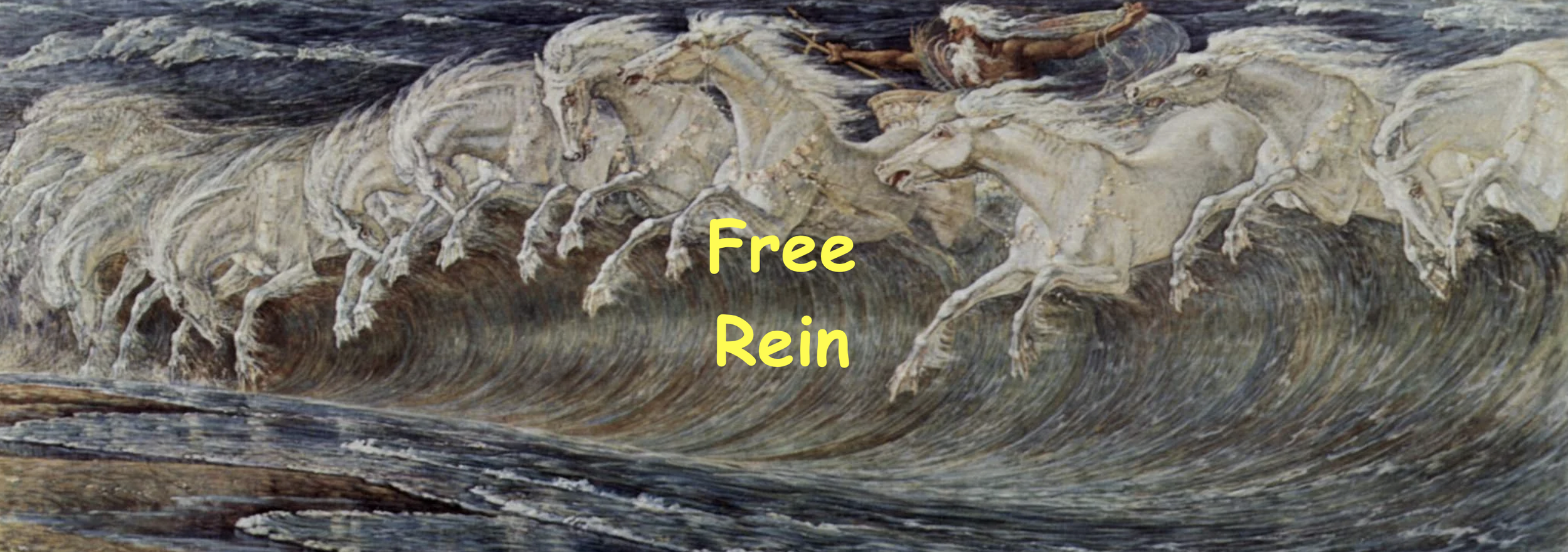
And for how many has Jung transformed that inner nightmare into something closer to adventure? Instead of being driven by searing distortions of fear, now they can imagine taking hold of the reins. They do this for their own comfort, without the false confidence that they can control the direction of the horse. It will canter or trot wherever it will, across the uneven foothills, into the burning heartland, or up the narrow headwaters of the unconscious.
This inner realm, once so full of dark corners and empty wastelands, is now an open field. The horse is flying beneath the swaying wheat. The rider can’t say where he’s going, so light are the reins in his hands. At last, he gives himself permission to go with the flow, to allow his occult mind to alter sense, time, and space. One moment he’s riding a horse and the next he’s looking out like Odysseus from the salty deck. He listens to the music, shrill and piercing like a bohemian opera, and gallops on through.
🐅
Next: 🐅 Knight Errors