
The Double Refuge ☯️ Herr Jung
Animal Dreams
III: When All Is One
Everything is One - Wily Coyote - Shankara & Rajneesh - Bhartrhari’s Snake
☯️
Everything is One
According to Jung, different versions of the anima are in fact the same anima. I like this idea because of its radical levelling of the playing field. It reminds me of Jesus with the outcasts, or Ramakrishna finding God in all things:
… some of [Ramakrishna’s] observations are downright earthy: “I have seen with my own eyes that God dwells even in the sexual organ. I saw Him once in the sexual intercourse of a dog and a bitch.” Another day he said that the Divine Mother had showed him Siva and Sakti in communion. “Everywhere I saw the communion of Siva and Sakti, in all living things,—men, animals, trees, plants. I saw Them in the communion of all male and female elements.” […]
In other words, to Sri Ramakrishna in his maturity there was no place where God was not. Once, while coming from the pine-grove to the Panchavati he was followed by a dog (dogs being regarded by the Hindus as most unclean). He stood still for a while; the thought had come to his mind that the Divine Mother might say something to him through that dog. During his Tantric sadhana he sometimes rode on a dog and fed it, taking part of the food himself. In this way, he said, he realized that the whole world was filled with God alone. (from Vedanta Kesari 1969)
This type of radical democratization isn’t for everyone. It doesn’t even seem to have been for Jung, who suggests that the different versions of the anima are to be accepted, yet then inserts a platonic-style hierarchy into their possible democracy. Not that Jung’s alone in reversing the hard work of Ramakrishna by adding an ascent from the 1. sexual & 2. aesthetic to the 3. spiritual & 4. intellectual, from Eve & Helen (temptation & beauty) to Mary and Sophia (devotion & wisdom). This is a staple in traditional religion and culture, and explains why Tantra, Ramakrishna, and Rajneesh are tolerated yet seldom emulated in India. There are far more more demure depictions of the sex-life of gods than are to be found on the temples of Hampi and Khajuraho.
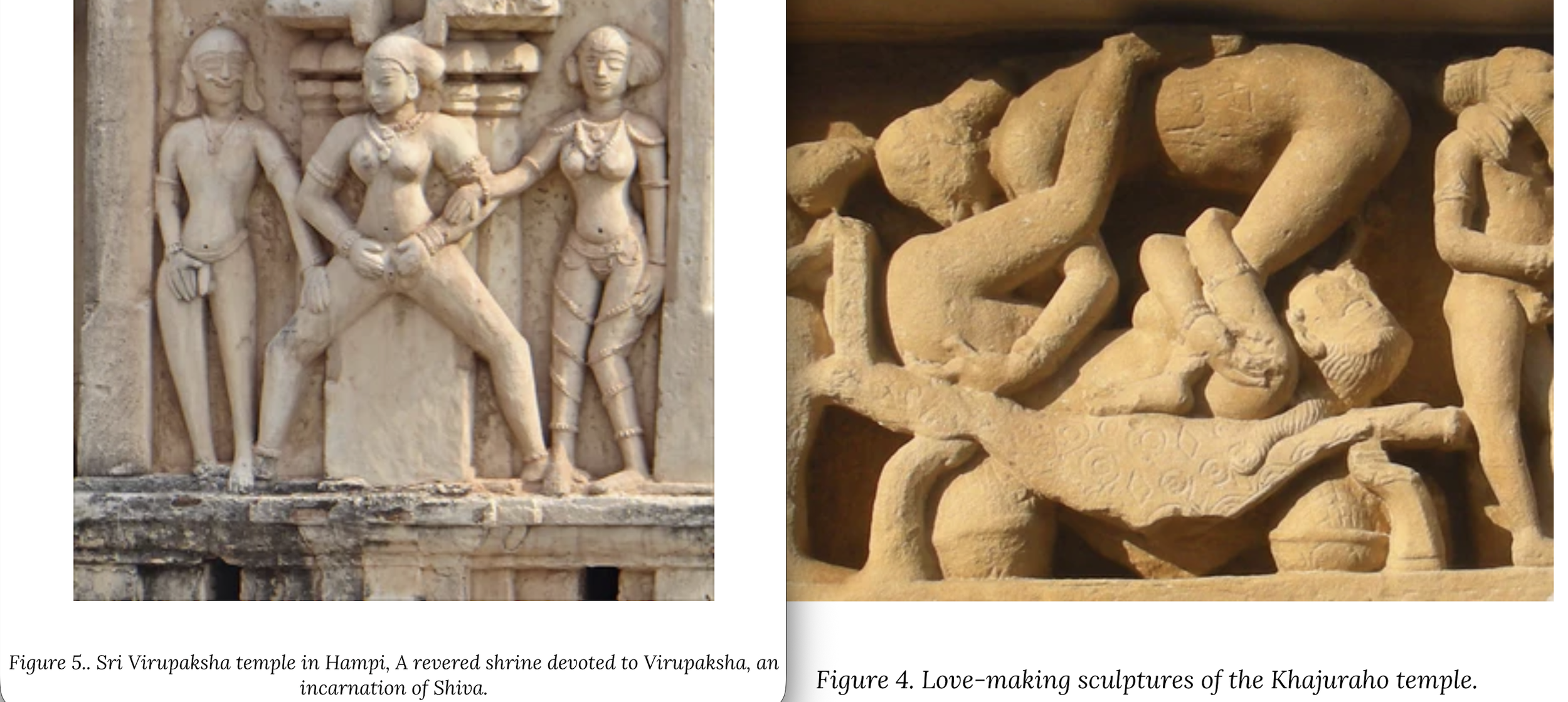
From MeMeraki artwork site, here
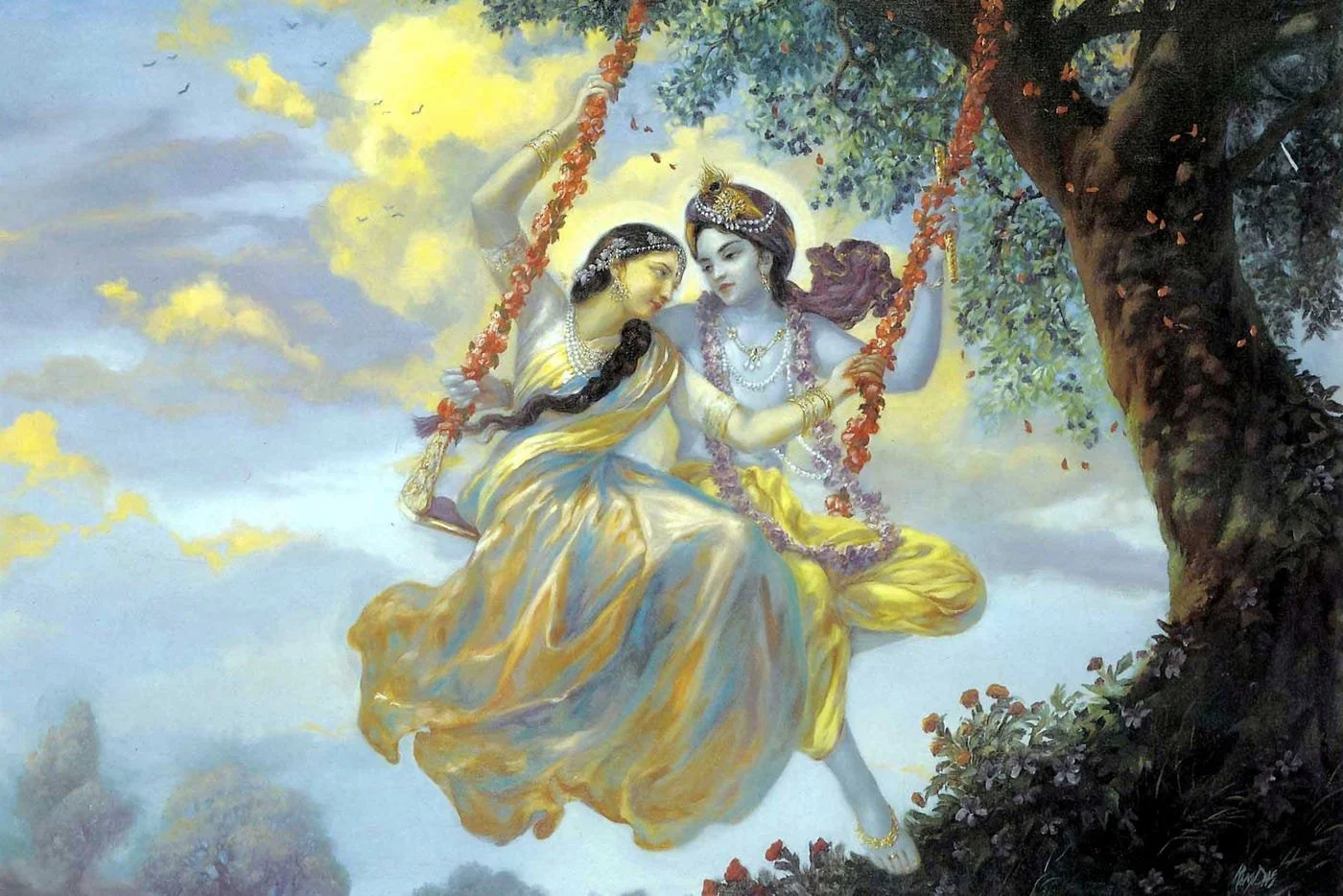
From Society for the Confluence of Festivals in India, here.
A decorous tilt among monks, sadhus, and polite society is understandable, yet this hardly recommends hierarchy to Psychology, which is about what the mind really is, not about what it ought to be to pandits, priests, and elegant ladies with their tea, cakes, and ices. If we truly accept our animal urges and sexuality, if we get to know Eve and Helen on intimate terms, how can we then turn our backs on them? Thinking of them in terms of actual women, I can only imagine how they’d feel.
Q. What could be worse than a woman scorned?
A. A woman subordinated, sublimated, and relegated to a lower rung!
Nor does this hierarchy help the bodies & minds that have integrated sex & beauty into their practices and ideals.
How are we to turn the neuron currents off? And why should we? Do we really think that God likes this hierarchy, and that His creation of the animal self, of its drives and passions, and the beauty of the human form, is beneath Him?
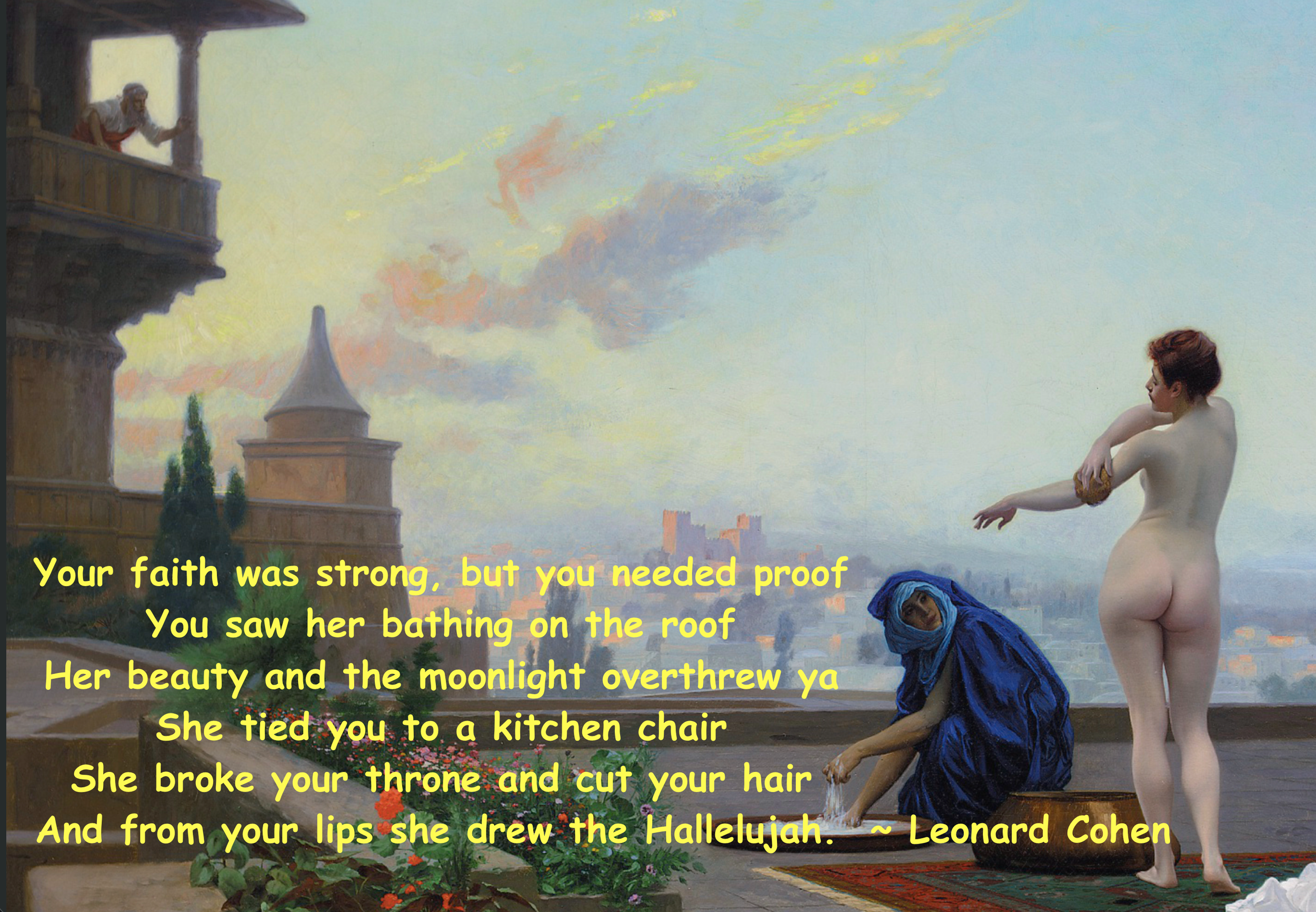
Jung’s hierarchy may make sense in light of traditional religion and morality, yet it’s confusing in terms of psychology: he urges us to accept the anima for what it is, in all its diversity, and then he says that we should ascend from the lowly anima to the higher anima. Yet what if we’ve already accepted the “lower one” as part of us, whether we see it as currents of hormones & neurons or as archetypes of 1. temptation & 2. beauty? How can we be whole if we leave that part of us behind, however tempting it might be to climb Plato’s spiritual ladder to the blessed realms of 3. devotion & 4. wisdom?
And — especially in light of Jung’s obsession with the holistic number four — why can’t we embrace all four?
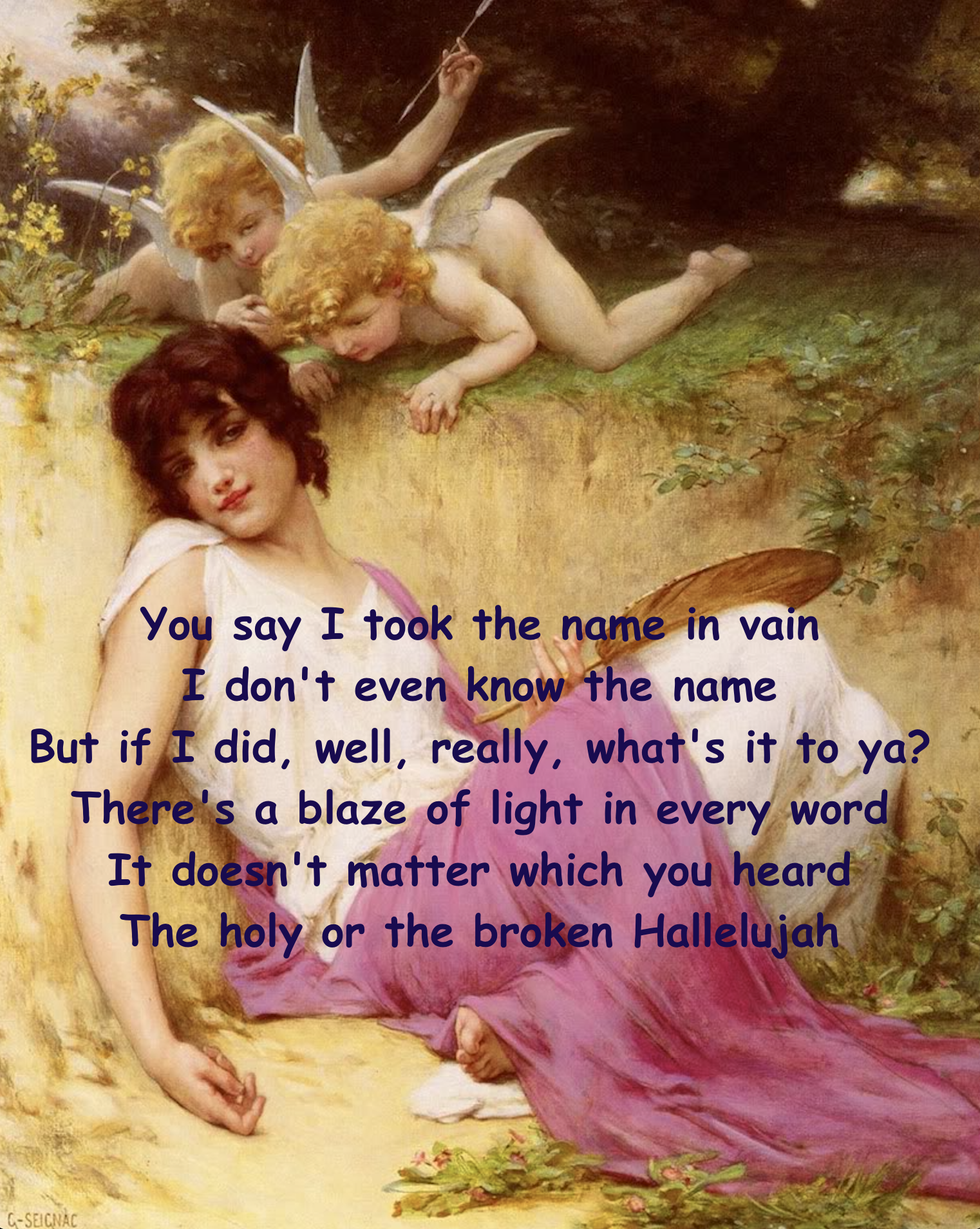
L'innocence, c. 1900, by Guillaume Seignac. Source (Wikimedia Commons)
Once we accept the sensual anima — Rosario Dawson with her bedpost sceptre, Eastern Jewel sucking the toes of Joan Chen, Scarlett Johansson and her two leading ladies, AOC dancing on a building top — does it make sense to leave them for the ascent of angels? Are we such elevated beings?
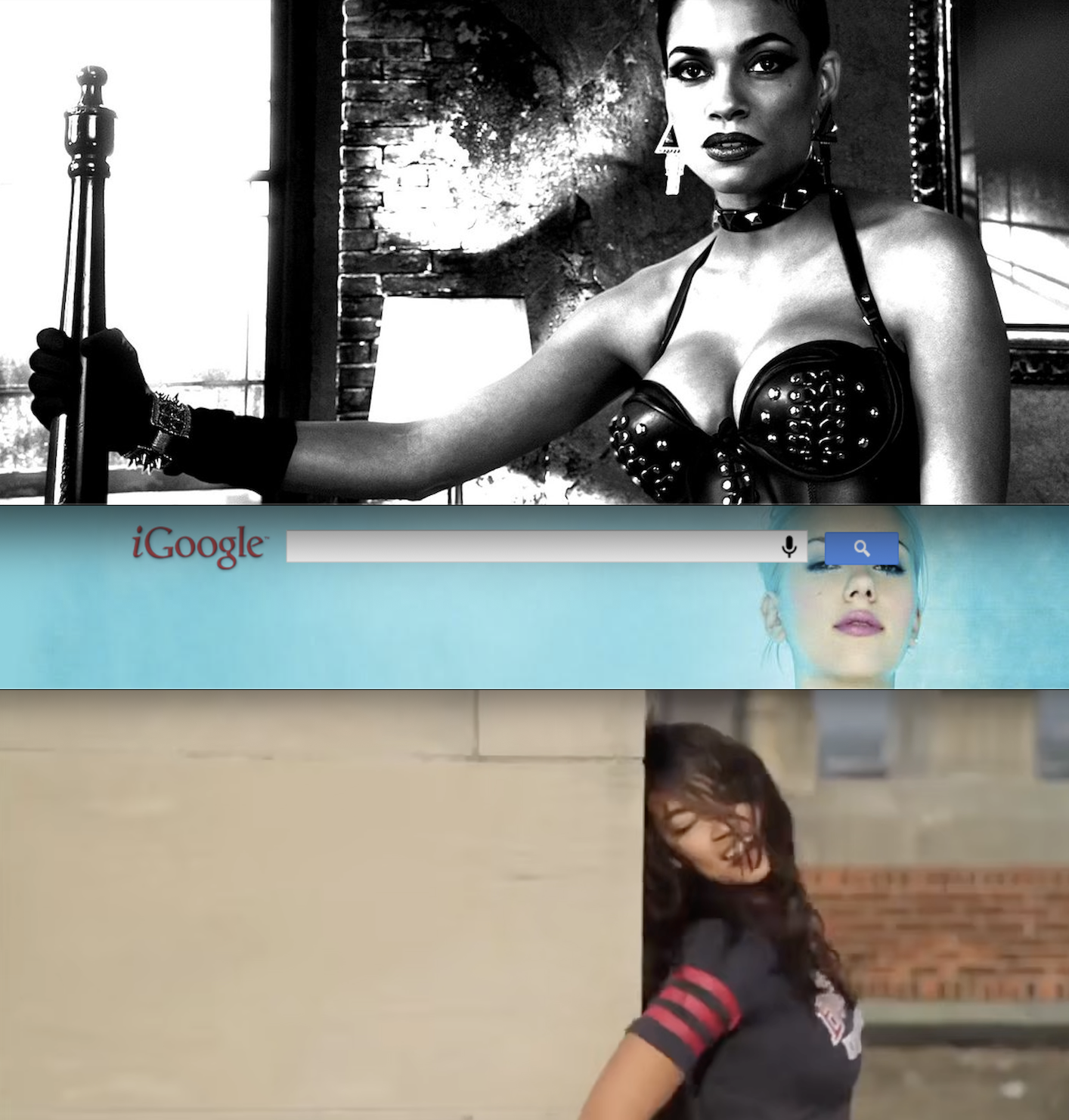
The picture that’s missing above is Eastern Jewel sucking the toes of Joan Chen, but perhaps some things are better left to the imagination. Which isn't as frivolous a point as it seems: real people, regardless of their poses, play their part in the old empirical understanding of the mind, which started in its more scientific incarnation by John Locke. Our sensations are at the basis, at the root of us, and what we see with our eyes only becomes meaningful once those sense impressions are deciphered and brought back together in the mysterious currents and waves inside our brain. The unconscious is a realm that reworks these images and ideas in our sleep, and we needn't be puritanical about this. In other words, I hope to dream of Scarlett Johansson, or some beauty like her, walking toward me on the concrete sidewalk, her silk shift shifting my thoughts, as she stops right in front of me, smiling with her full lips and mischief dancing in her aquamarine eyes. I hope to see and hear the mermaids, each singing to me in my underwater world.
Just as we aim to move past the hierarchical puritanism that makes us look down on others because of their sex, caste, race, status, etc., so we might open our minds to accept, both in our waking fantasies and in our dreams, the temptations & beauties that still drive us deep down inside. This doesn't mean to let go of principles and moral values, such as Thou shalt not kill, Thou shalt not torture, or Thou shalt not cause suffering. Rather, it means to grab onto principles and moral values which are more inclusive, not just on a political level, but on a personal level, inside our own minds.
We may worship the Virgin Mary, but none of us believes the species could exist without sex. Mary is far more valuable as an ideal of love, mercy, & forgiveness, than she is as a model of gender identity or a perfect sex life. In this sense we might also worship Mary Magdelene, the more human counterpart to the Mary of the million icons:
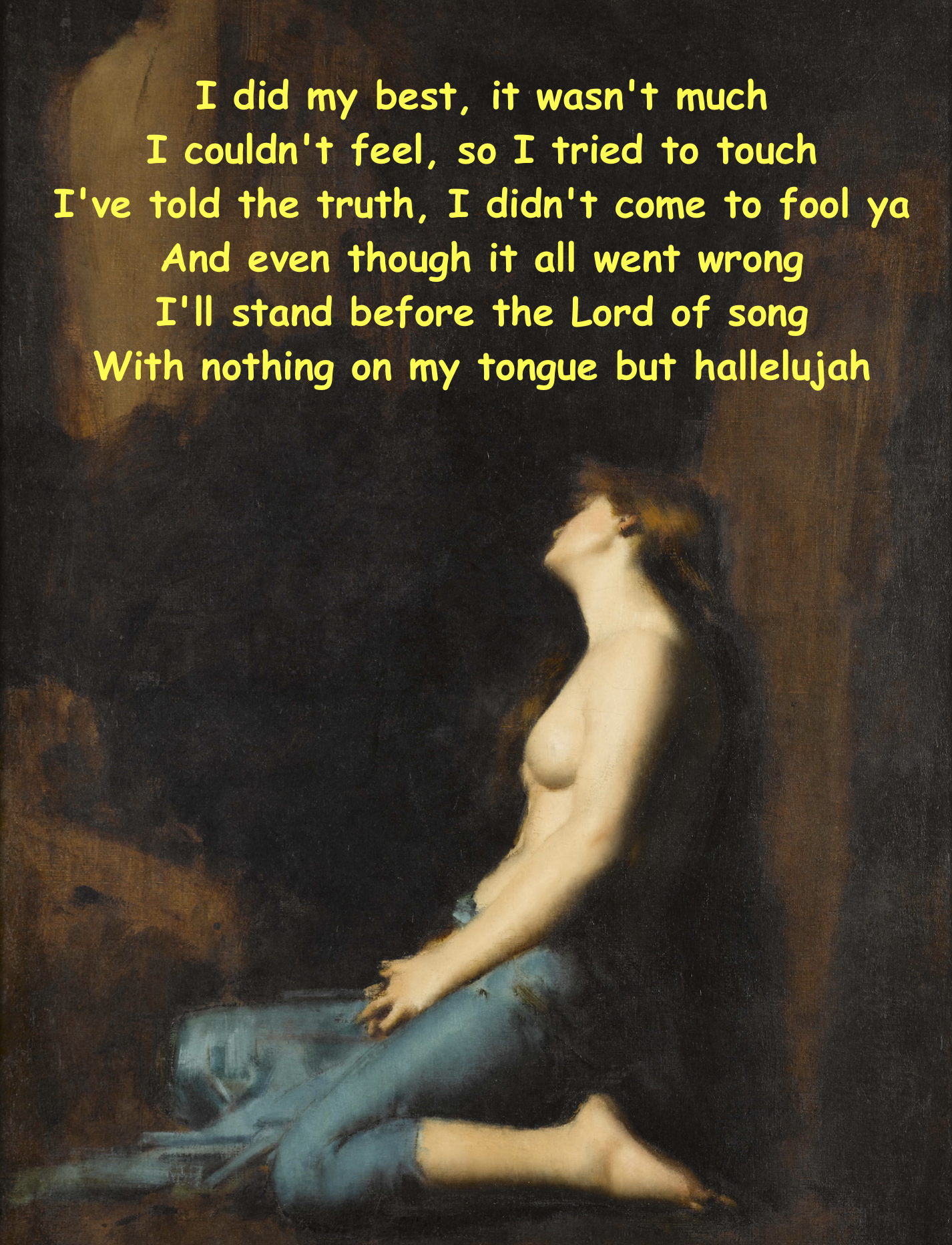
La Magdeleine, c.1878-1880, by Jean-Jacques Henner, in the Musée des Beaux-Arts de la ville de Paris (Wikimedia Commons)
Much could be said about the damage that hierarchy has wrought on religion, from the rumour-mongering about Mary Magdalene’s prostitution (invented by Pope Gregory in 591) to the repression and guilt of countless young people across the ages (Keats believed that his TB was caused by too much masturbation), to the rebound effect of forced celibacy (for example, on the altar boys of Boston and who knows where else). But looking at this body/spirit duality and hierarchy in connection with psychological problems and with such notions as the anima and shadow, I’d say that Jung’s hierarchical ascent of the anima 1. feeds into societal hierarchy, 2. plays havoc with our emotions, and 3. invites the very catastrophe he identifies as the revenge of the Shadow:
1. The ascent creates a divide between inferior and superior. This type of divide has made religion into an elite club, from caste in India to the Elect in Christianity. It leads to the type of pride, prejudice, and hypocrisy that Premchand writes about in “Deliverance” and which Hawthorne writes about in The Scarlet Letter. In Hawthorne’s novel, Hester wears the scarlet letter A on her chest because she’s an adulterer. She lives in shame and anger while the minister who preaches against her adultery is the one who got her pregnant.
2. The divisions implicit in hierarchy work against the co-existence which is fundamental to the human condition in general and to Jung’s holistic psyche in particular. We exist as a body and a mind; as a mix of functions & urges and as a mix of emotions & thoughts. These two mixes are interconnected both neurologically and psychologically; our basic bodily functions coexist with our complex thoughts. An extreme example illustrates the point: try thinking refined thoughts when you haven’t eaten for two days.
3. Jung argues that if we repress aspects of ourselves, these repressed aspects surge up into our dreamworld in the disturbing forms of the Shadow. If we repress sex & beauty, won’t they, in the hooded guise of the Shadow, just end up biting us?
I suggest that we leave hierarchy and ascent aside so that we might deal with the physical and psychological reality that we are. We might let different versions of the anima co-exist, just as the anima and Shadow co-exist, and just as we let our anger and our compassion co-exist. And instead of letting them possess us, we might take possession of them. We might own them — not in a controlling sense, but in the sense of accepting that they’re ours, whether they’re the result of disturbing things we’ve seen in the world or on the news, or whether they’re the result of our own actions and thoughts. We might allow each their range and nature, instead of compressing them into a moral order, much less a puritanical hierarchical order.
Why create scenarios in which one is above the other, especially when Jung cautions us against ego superiority and repression? This repression only makes us vulnerable to that part of our psyche that we have repressed and made separate from us. The levelling of Ramakrishna is more helpful here than the ascent of Plato.
☯️
Wily Coyote
In my dream she was about to bite me, and I was about to raise my right arm. I woke up before I found out what happened next. Would I have struck her or thrust her away, making an enemy of her? Or would I have embraced her, knowing that her sharp eye-teeth were just a dental prop?
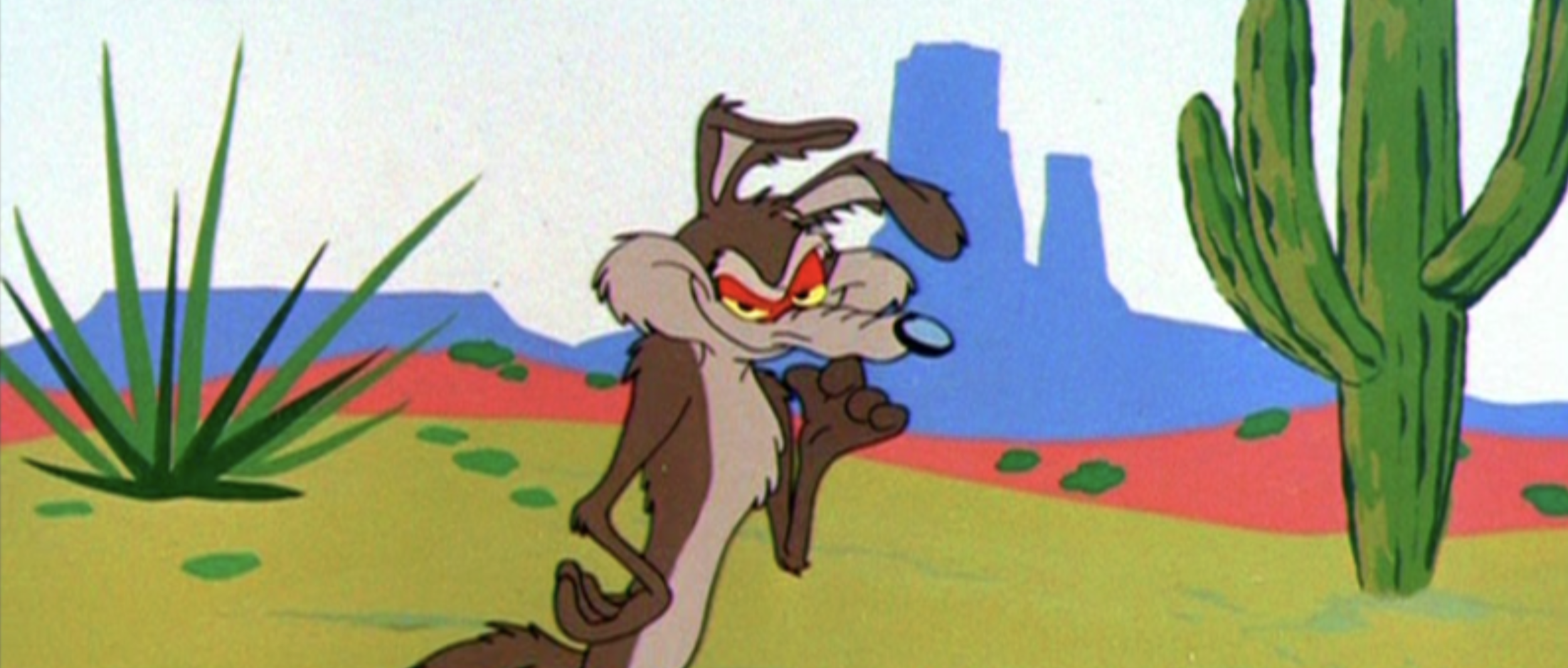
It doesn’t help that I have a phobia about dogs and wild animals. I was a paperboy and was regularly aggressed by dogs. These repeated sense impressions are hard to ignore, especially when they lie deep within, buried where my instincts to survive persist. Which is why it’s hard to keep the combination of fear and concrete memory from slipping into my dreams. In addition to my fear of dogs, a coyote recently attacked me on a golf course. As it bounded toward me I ran to my golf cart. The only option was to swing my club at its head. That seemed too brutal, too much a last resort.
In the heat of the moment, when the coyote is heading toward you or the Chinese lesbian vampire is leaning in for a bite, it’s hard to negotiate a peaceful outcome. In Collodi’s story, Pinocchio arrived at all sorts of agreements with the fox and cat. The cat even helped Pinocchio to solve a math problem: he calculated exactly how much money Pinocchio would make in The Field of Miracles: 2,500 gold coins. All he had to do was put his five gold coins into the ground, cover them with dirt, water them, and leave them alone to allow them to multiply.
The cat and fox were ahead of him every step of the way. Luckily, he had the Blue Fairy, who saved him every time. On the golf course I had my club, my legs, and a cart. In my dreams I have none of those things. All I can do is hope to meet an amiable anima. Or, failing that, call for the Blue Fairy.
I console myself that in my dream the Chinese lesbian put in false teeth. I take this to mean that her bite wasn’t real, and that the danger wasn’t either. The dream was only the fabric of an inner vision. The image of a vampire was just so much tinseltown movie drama. Which might have meant that the encounter was meaningless. Or that there was a different meaning.
☯️
Beyond the particulars, beyond the eye-teeth and Talking Cricket, I wonder if I can get myself to accept that my anima and I want the same thing, deep down. The conscious and the unconscious both want sex. Both love the bodies of women. But can we agree that while there should be no sexual boundaries on what’s holy, this doesn’t mean that there aren’t boundaries for violence? I’d readily sign a contract entitled Sex But No Biting, but would my anima? Would my Shadow? Am I fighting a futile battle, 🥷 against a million years of survival, 🥷 against the DNA that makes us the most violent creatures on Earth, and 🥷 against that part of us that wouldn’t hesitate to bash in the head of a coyote?
☯️
Shankara & Rajneesh
In his “Confrontation,” Jung writes that he chanced to meet “a highly cultivated elderly Indian.” The “ghostly guru” of this man was Shankara, the 8th Century philosopher of Absolute Non-dualism. According to Shankara, everything is Brahman, God. All relativity, all matter, all this that we see and hear is in fact, in essence, That Greater Reality.
Does this mean that no matter what we do in our beds and in our dreams, everything is holy? That all this is That?
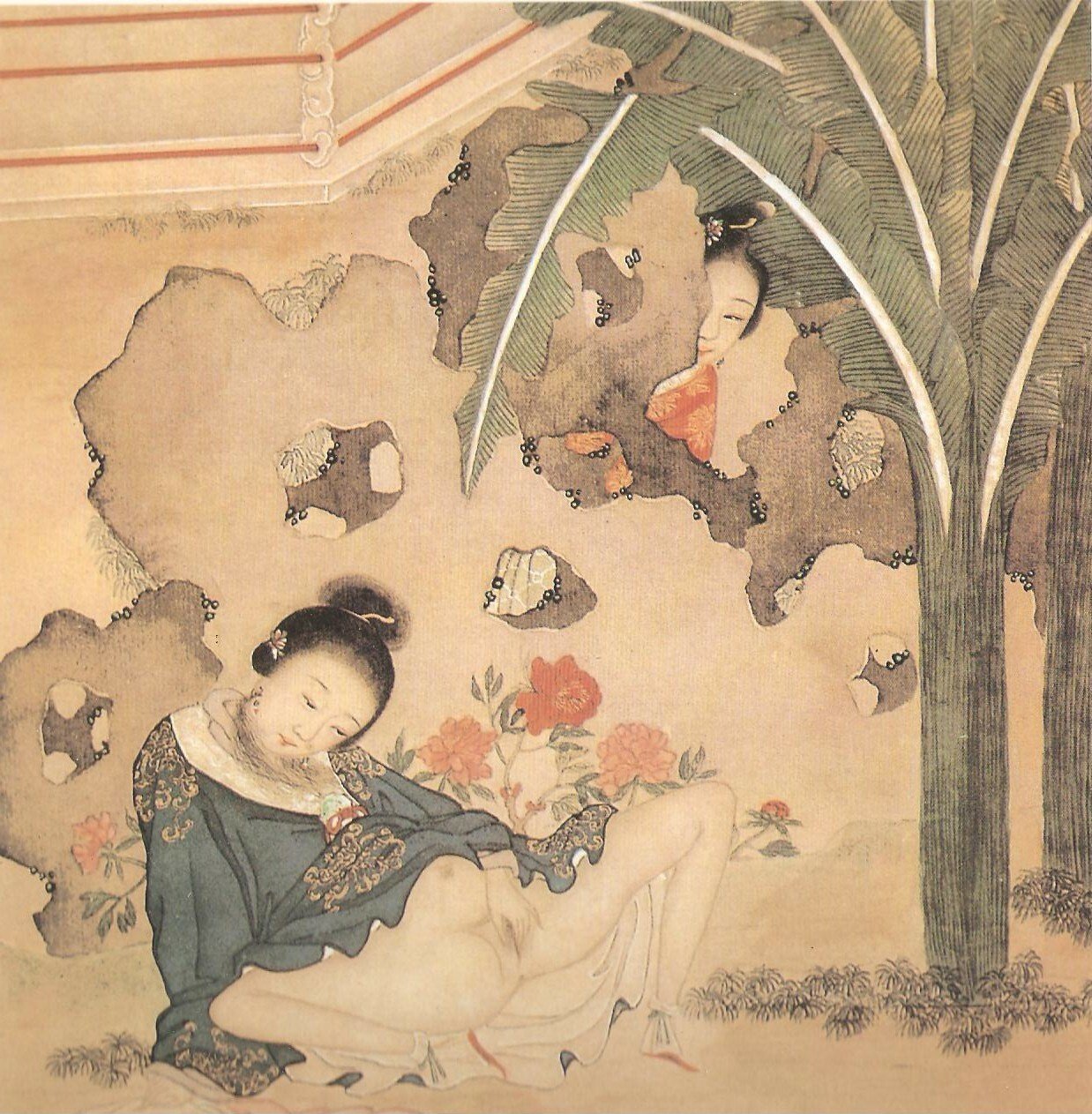
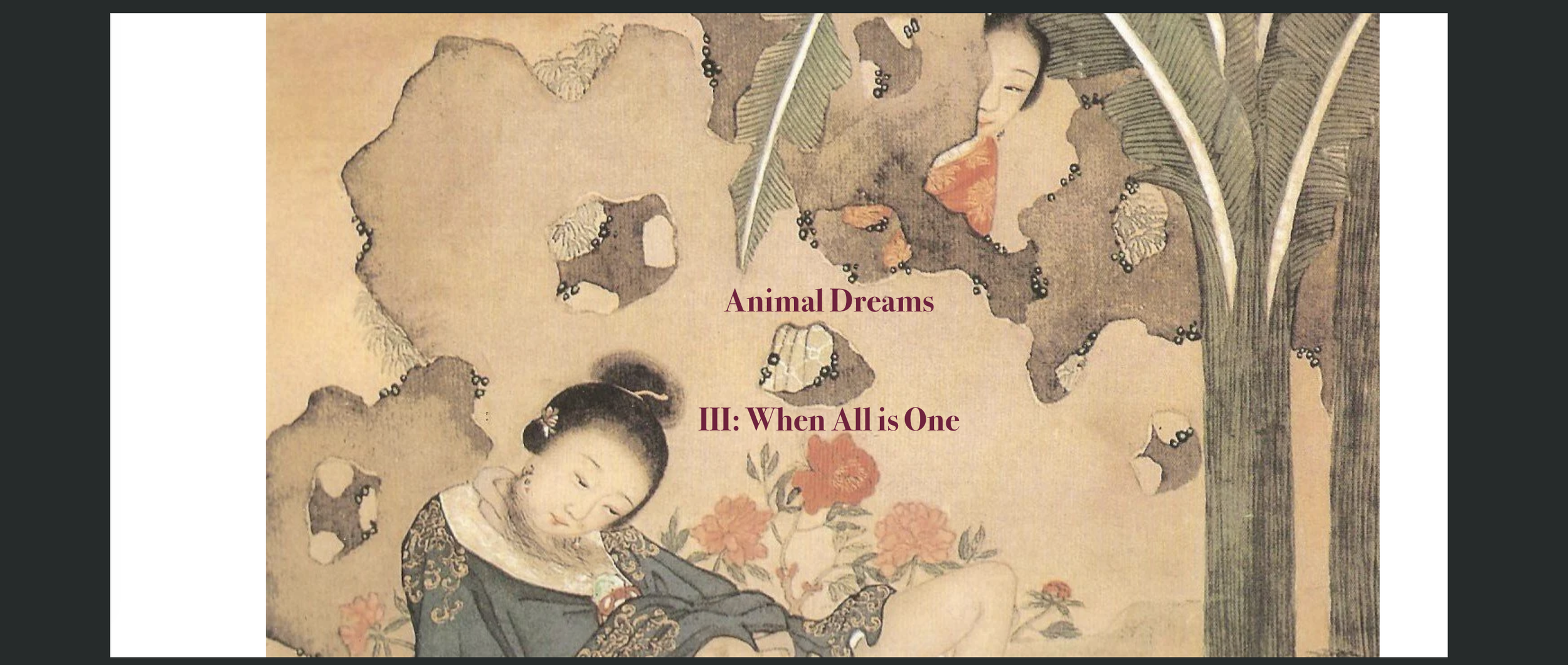
Беларуская (тарашкевіца): Малюнак жанчыны, якая мацае сваю пісі. Жанчына падглявае за ёю. Парнаграфія з КНР. 中文(香港):清代秘戲圖 2011, Source.
This was more or less the philosophy of Rajneesh, who was hung on the spit of Hindu puritanism for pointing out that we do in fact have cocks and cunts, and that while we seldom talk about it we often like to put these body parts in close proximity. We desire to see breasts and the smoothness of a thigh leading to …. you get the idea. I’ll refrain from adding another picture.
All of this may seem like the product of a dirty mind. It is. And yet, as Procol Harum notes in “A Lighter Shade of Pale,”
If music be the food of love
then laughter is its queen,
and likewise if behind is in front
then dirt in truth is clean.
Even if I never find out that my foxy Chinese lesbian sex-maniac anima is holy, I’d still believe that all this, and I mean all of it, is That.
After frolicking in the fields
with the milkmaids, like Rajneesh,
All I can say to the pandits,
with their holy frowns, is Sheesh!
☯️
Bhartrhari’s Snake
The demonization of sex is an old game, one that the 6th century poet Bhartrhari dealt with in subtle ways, as when he wrote, “The clear bright flame of man’s discernment dies / When a girl clouds it with her lamp-black eyes.” In terms of the three basic qualities of life, it may be sagely to clarify your soul, making it pure sattva and eschewing the darkness of tamas, yet it may be more fitting to embrace rajas, action and passion. Rajas might be seen as “The force that through the green fuse drives the flower,” to use the famous line by Dylan Thomas. Given its tangible nature, its life-giving force, and its ability to connect us to the changing moment, rajas may be a better ally than purity on our journey through life. Not that we can’t aim for both rajas and sattva; just that rajas seems to be closer to our human nature and our human needs.
The wise words of the sadhu and monk may help us come to terms with entropy and death, yet they don’t do as much for creation and life as the sly smile of a beautiful woman, or the jangling anklets on a dancer — like the one I followed all over Vancouver to watch, mesmerized by the beauty of her movements. How to divorce sensuality from spirit in a a dance such as this?
Nor does the divorce of sex and spirit fit easily with Hindu thought, especially the non-dualism of Shankara, who observes that we often mistake the real world — a rope — for some mystic evil — a snake. I’d revisit Shankara here: what we see as dangerous or evil — the snake — isn’t evil to begin with. To humans it can cleaqrly presnt a hidden and sneaky dinger, yet to Vishnu it is Shesha, the protector above him or the couch on which he and Lakshmit lie.
From such a height the snake is strong, beautiful, flexible, likea rope with muscles and volition. In this case, it’s lucky to see a rope as a snake. The only error would be to treat eh snake as a rope, especially if you’re walking acorss a path in a thick forest. In other words not only is there no reaon to Let it climb the air as if it were a rope, giving the fakir a lesson on what is the true mystery. It remains a snake, beautiful in its glistening strength. There’s no need to make it into a rope. The snake is as much God’s creation as a dove, which is of course why in India we find temples to snakes and rats.
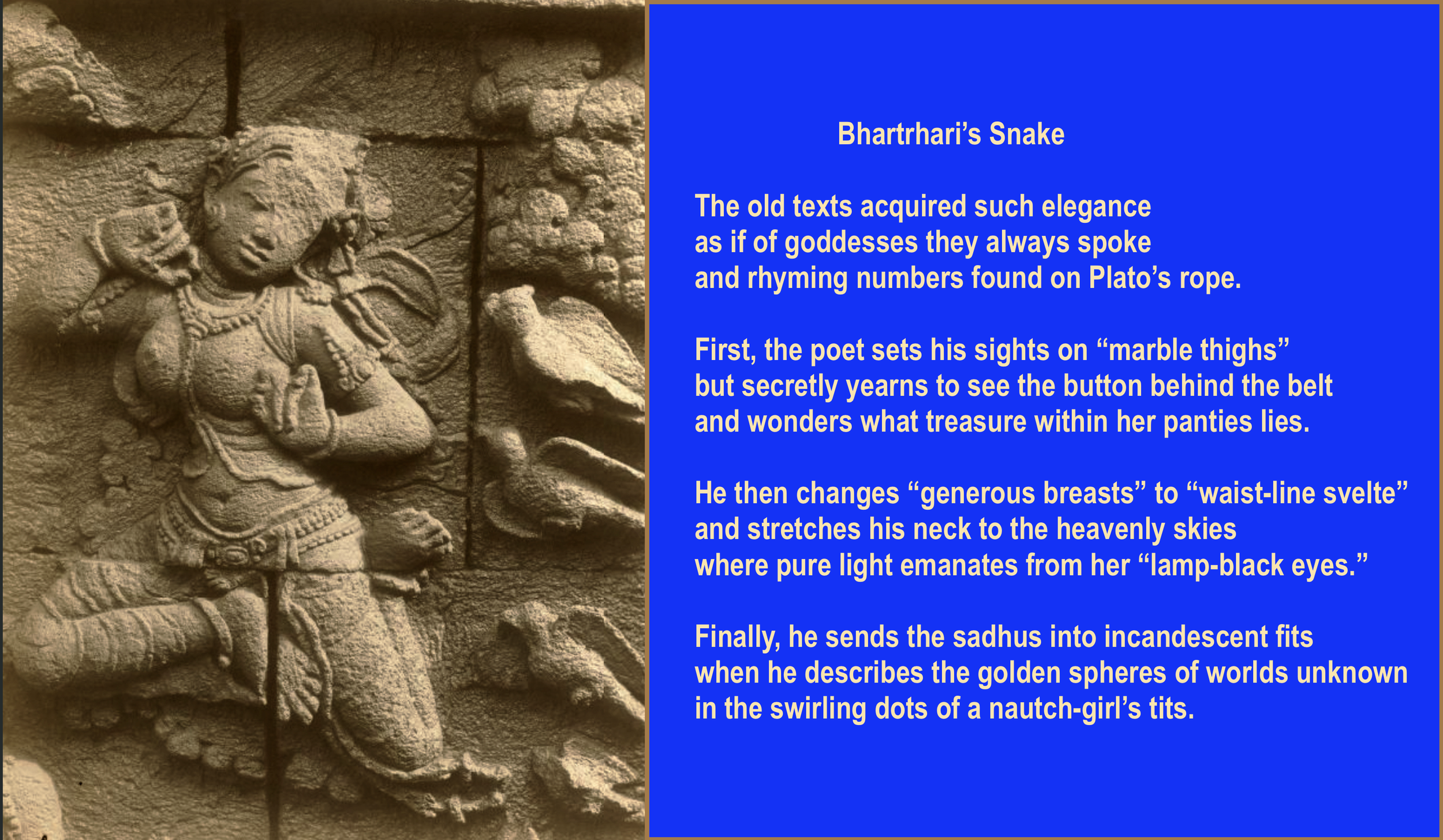
Apsara floating in clouds with birds (the men sitting below her are cropped from the picture), from Borobudur gallery 1. 9th century, photo ca. 1900 Leiden University Libraries number: KITLV 87571. Date: March 2021, 04:09:10. Source; Author: Kassian Cephas (1845–1912). (From Wikimedia Commons)